
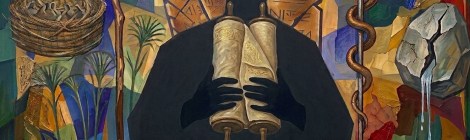
Yisro – When Unity Becomes Dangerous
We talk a lot about unity as if it’s automatically good.
This week’s parshiyot suggest something more unsettling: unity can be powerful and destructive — depending on what it’s built on.
We talk a lot about unity as if it’s automatically good.
This week’s parshiyot suggest something more unsettling: unity can be powerful and destructive — depending on what it’s built on.
The Sages blame many wilderness failures on the Erev Rav, the Egyptian converts.
But was this about scapegoating a group… or diagnosing influence?
What if the real danger wasn’t them, but what they mixed into us?
When the Israelites left Egypt, they chose to take the leftover maror with them. It wasn’t commanded. It was carried.
What we do with our pain after freedom might matter as much as how we survive it.
Did God take away Pharaoh’s free will—or did he trap himself? Explore how pride and unchecked desire can weigh down the heart, even in the face of miracles.
There’s a moment when looking away stops being neutral.
The Torah describes it as “there was no man.”
That’s the moment when a part of you either lives—or dies.
In Vayechi, Joseph’s brothers approach him after their father’s death, but their fear and his restrained response show that true reconciliation never fully happened. Why?
Becoming a father again has me reflecting on Vayigash: how we support our children, how we let go, and how faith guides us when we can’t protect them completely. Yosef shows that true parenthood is both care and trust.
Dreams feel meaningful even when they’re absurd. The Torah takes that seriously. Hebrew encodes a theory of dreams built on paradox—and Yosef used it to unlock Pharaoh’s dream.
Vayeishev keeps coming back to clothing—Yosef’s coat, his garment in Potiphar’s house, Yehuda’s cloak. Each one reveals identity in a surprising way. As Chanukah begins, I reflected on what our own “garments” say about us, and how the holiday pushes us to show who we really are.
A surprising kabbalistic tradition links Shechem’s corrupted desire to Rabbi Akiva’s sanctified passion.