

Over a year ago I wrote an article for Aish.com under a pseudonym. The piece was an intimate detailing of me and my wife’s thoughts and emotions as we experienced our second miscarriage and how I tried to make sense of such pain. I’d like to say that after that article ran, everything turned itself around with our next attempt. Instead, my wife and I went through another high holiday season “expecting,” only to find at the ultrasound scheduled for the third day of Sukkot that the embryo was not viable. On Simchat Torah, my best friend, Joshua, tried to buy me the honor of Pesica (the opening of the ark, considered a spiritual opportunity for pregnancy). I tried to refuse, but I couldn’t get out of it. Opening the ark was so painful, especially knowing my wife was in the parking lot Sukkah, waiting to leave, not being able to connect with any of the festivities.
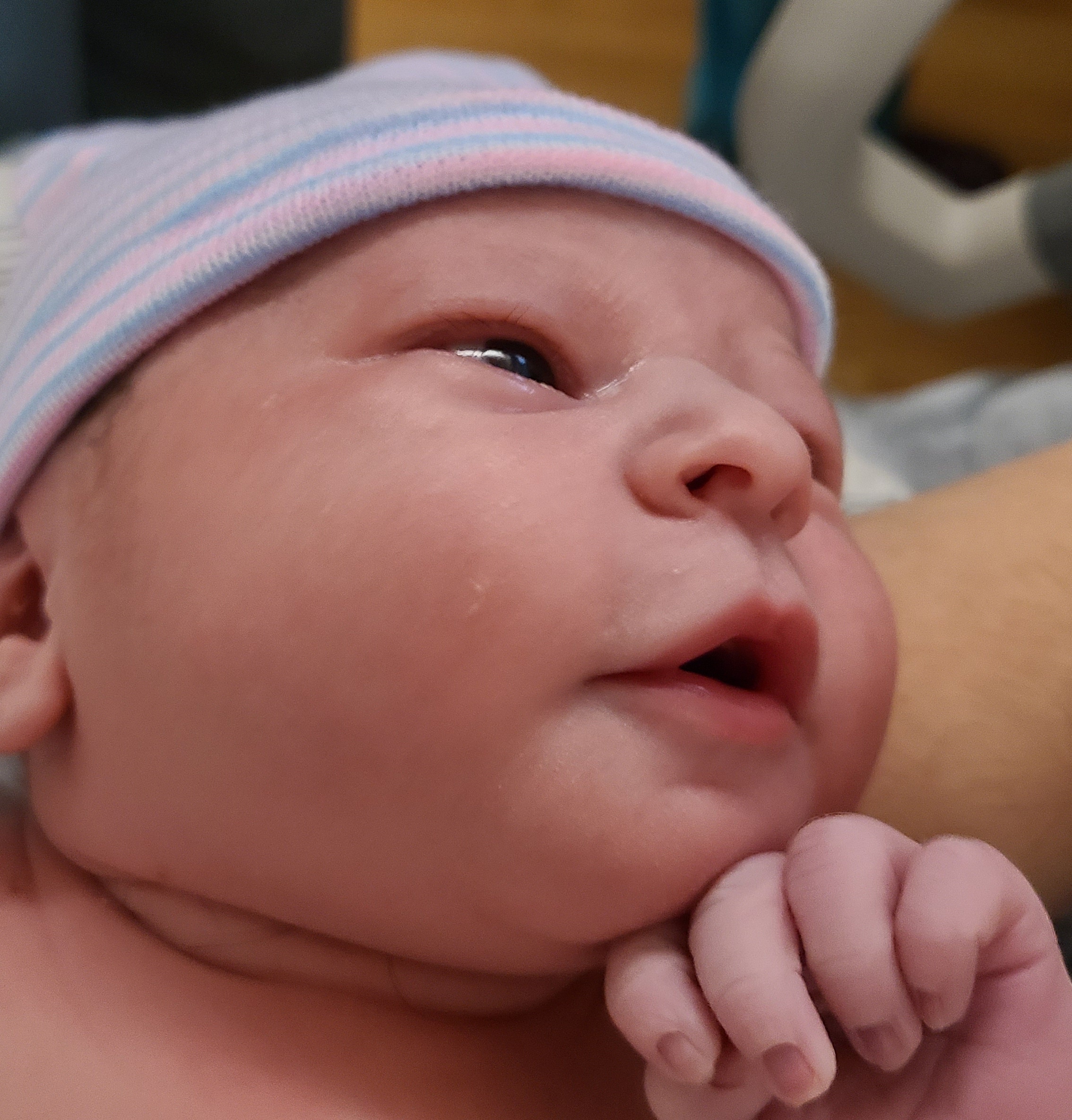
Then, a year later, I found myself running to my synagogue late. It was Shemini Atzeres (Simchat Torah’s counterpart) and I was only planning to come for the Torah reading. I needed to be there to announce the Hebrew name of my three day old daughter. After watching both my reform father and reform father-in-law get aliyahs, it was my turn to approach the Torah. After the reading, I announced to my community that my daughter’s name was Nechama Leah.
Dancing around the bimah with mazel tovs and hugs, it was one of the most gratifying moments of my life. Then (without any notice) I was asked to speak about the name. Unprepared, I opened up to a room full of people who I now had come to see as my extended family, about many of the struggles my wife and I had had over the last 2 years. How over the last three Yom Kippurs we were pregnant, but only after this recent one did that pregnancy result in answered prayers. And that was why our daughter was named Nechama (Hebrew for comfort.) I have rarely been so raw in public.
I took my seat as I hugged my father and my Rabbi began to speak. First about my words. But then about the idea of why we break a glass at a wedding. Not because of the remembrance of the destroyed Temple, but because unfortunately, we must temper our joy with harsh realities, lest we forget our purpose on this Earth. All of this was in service of his next comment…
He revealed to the congregation that Israel was in the midst of disaster.
Though we are supposed to be in the time of our joy, the final day of the holiest period in the Jewish calendar, and I was sharing a simcha with the community, Israel was experiencing the bloodiest moment of its history. Not since the Holocaust have so many Jews died in one day. I was utterly torn.
Over the coming days, I would see new and terrifying horrors shared on the news, mostly coming in from the 6 inch rectangle in my pocket. I would try to put my phone down and focus on my baby, but my feeding/diaper tracking app is just a button press away from Instagram, Facebook, and hundreds of news sites, it was hard to resist the “doom scroll.”
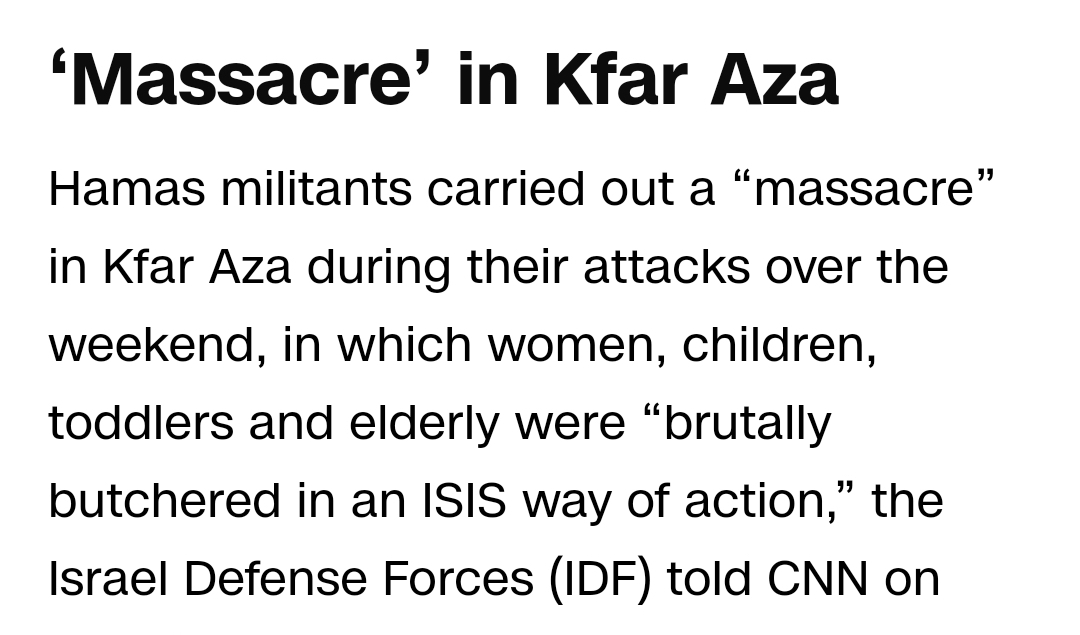
I love my daughter, and I love these earliest days with her, they’re magical. My wife and I have never been closer. I’ve never felt so blessed in my whole life. Holding my newborn daughter has given me so many things I only imagined I would ever have. At the same time there is a picture of an infant, being held by a rescue worker. Because both of the child’s parents are dead. So my joy is tempered by sadness, fear, and so much anger. It feels wrong that I should feel such joy while my extended family (all of Israel) is in so much pain and worry.
While we were struggling to have our child, every time anyone on social media announced they were pregnant or had a baby, it sent us into such a sad and dark place. So for the entire pregnancy, we decided not to post anything on social media until our daughter was born. But now with the hurt and chaos, I don’t feel it is right to share our cute pictures detailing how many hours our baby has been alive while wearing a onesie with an impossibly cute joke stitched into the chest. “Best gift ever” or “Poop loading…” Such posts would feel silly and insensitive when compared to the acts of leadership from friends, Rabbis, and anyone desperate to help. I was witnessing the Jewish world come together and I wanted to be a part of it. But instead, I was insulated in my apartment, changing diapers, washing dishes, struggling with my wife at 3 am to help our daughter eat.
When I get a moment of peace (usually while washing dishes) I try to avoid Youtube and listen to a Torah thought. I don’t recall who said it, but one video made the comment that it isn’t just the IDF soldiers who are on the front lines. This war isn’t won with bullets and drone strikes alone. There is a spiritual dimension to this conflict. When we pray, do acts of kindness, learn Torah, and do mitzvahs, those acts all have an impact. Every Jew has their front line to hold.
I love this idea. I want to learn just a little bit before bed, or try to say a verse of Psalms. But as any parent will tell you, at this stage, you’re struggling just to keep up with anything. Eating, showering, our apartment looks like a warzone, and of course, getting an hour of undisturbed sleep is a miracle. How can I possibly keep up my front line?
Then Joshua texted me something that got through the haze of sleep deprivation and confusion. “You’re taking care of a brand new Jew. There isn’t anything bigger than that. If you were a single guy without kids, I’d agree you could be helping Rabbi so and so all night pack care packages or collect suitcases. But B”H you’ve got more important… doodies.”
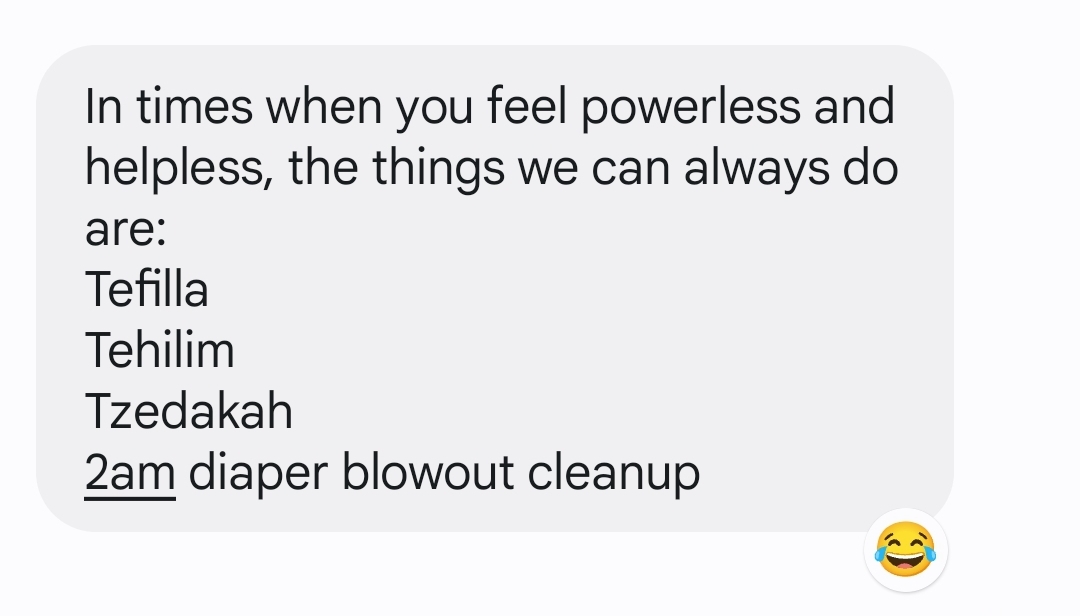
So as another friend and fellow Aish contributor put it, “Being a Jew means celebrating even in the face of darkness. You having a beautiful child gives me hope.” We all are in unique places: physically, emotionally, spiritually, etc. We are in those situations for a reason. I cannot believe it is just a coincidence that Nachama Leah’s naming happened to share the day of the attack. However you can contribute to the effort is not only needed, it is holy. Even if that contribution is getting yourself (or someone else) out of bed. You have no idea where that contribution will take you in say… two years from now.
A version of this article first appeared on Aish.com.
 Six Degrees Of Kosher Bacon