
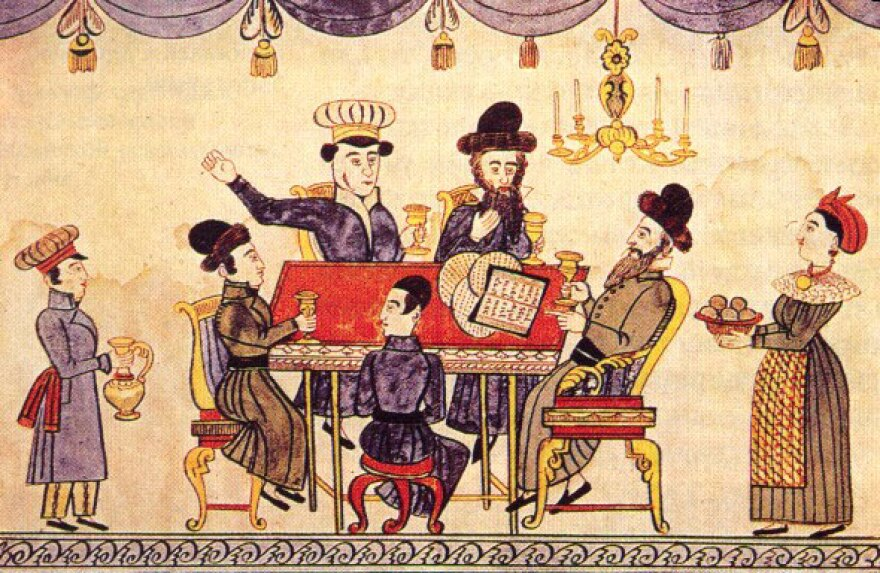
This is the bread of affliction that our fathers ate in the land of Egypt. Whoever is hungry – let him come and eat! Whoever is needy – let him come and celebrate Passover! Now we are here; next year may we be in the Land of Israel! Now, we are slaves; next year may we be free men!
If we look closely at the opening to the Maggid section of the Haggadah a few questions are bound to pop out. And why shouldn’t they? Questions are what the Seder is all about.
Lechem oni – the poor man’s bread aka, the bread of affliction.
We’re told we eat matzah on Pesach because our forefathers were too busy leaving Israel to let the bread rise. Also isn’t matzah the bread of our freedom? Why does the Haggadah refer to the matzah as lechem oni?
Whoever is hungry – let him come and eat.
Shouldn’t we have asked this in shul or on our way home? I doubt anyone is lingering outside our homes waiting to be invited via this non-vitation.
Whoever is needy – let him come and celebrate Passover.
Is Pesach a choice? If we’re not needy can we just skip all the cleaning and expensive kosher l’pesach food? I’m pretty sure this is a commandment. In fact, the koban pesach is one of only two “asay” or proactive mitzvahs you get punishment for not performing.
Now we are here; next year may we be in the Land of Israel!
This is all well and good… unless you’re one of the 7 million Jews living in Israel today. Should they skip this part?
Now, we are slaves; next year may we be free men!
Now for the biggest question of all. Are we slaves? Do we really think of ourselves as needing freedom? If the answer is no, it means we’re content with our lives, which is a dangerous slavery to be living under. If we’re comfortable, we will try to protect that contentment and stop asking the big questions. In fact, it is the questions that might threaten our contentment which are the most important to be asking. But also the scariest.
What is real? What is meaningful? What are my goals? Am I growing? Am I right or is there something more to understand? I have my answers to the questions posed by the opening section of Maggid… or at least I think I do. Do you?
Rosh Chodesh is the first mitzvah Hashem gives to the Jewish people as they start their freedom. A free person must manage their time. But Pesach isn’t a celebration of schedules and punctuality. It is a night filled with questions. As long as we keep challenging our assumptions, meditating on what is put before us, and pressing harder for deeper understanding, then we will have freedom on a whole other level. It’s when we stop asking questions that we become the metaphorical sheep we were to have sacrificed the night of our Seder.
 Six Degrees Of Kosher Bacon