
My father-in-law has a wealth of Yiddish sayings. One of them goes: Ven iz a yid freilaj? Ven er farlirt epes aun gefint es vider. Which translates to, When is a Jew happy? When he loses something and finds it again. I’ll come back to this.
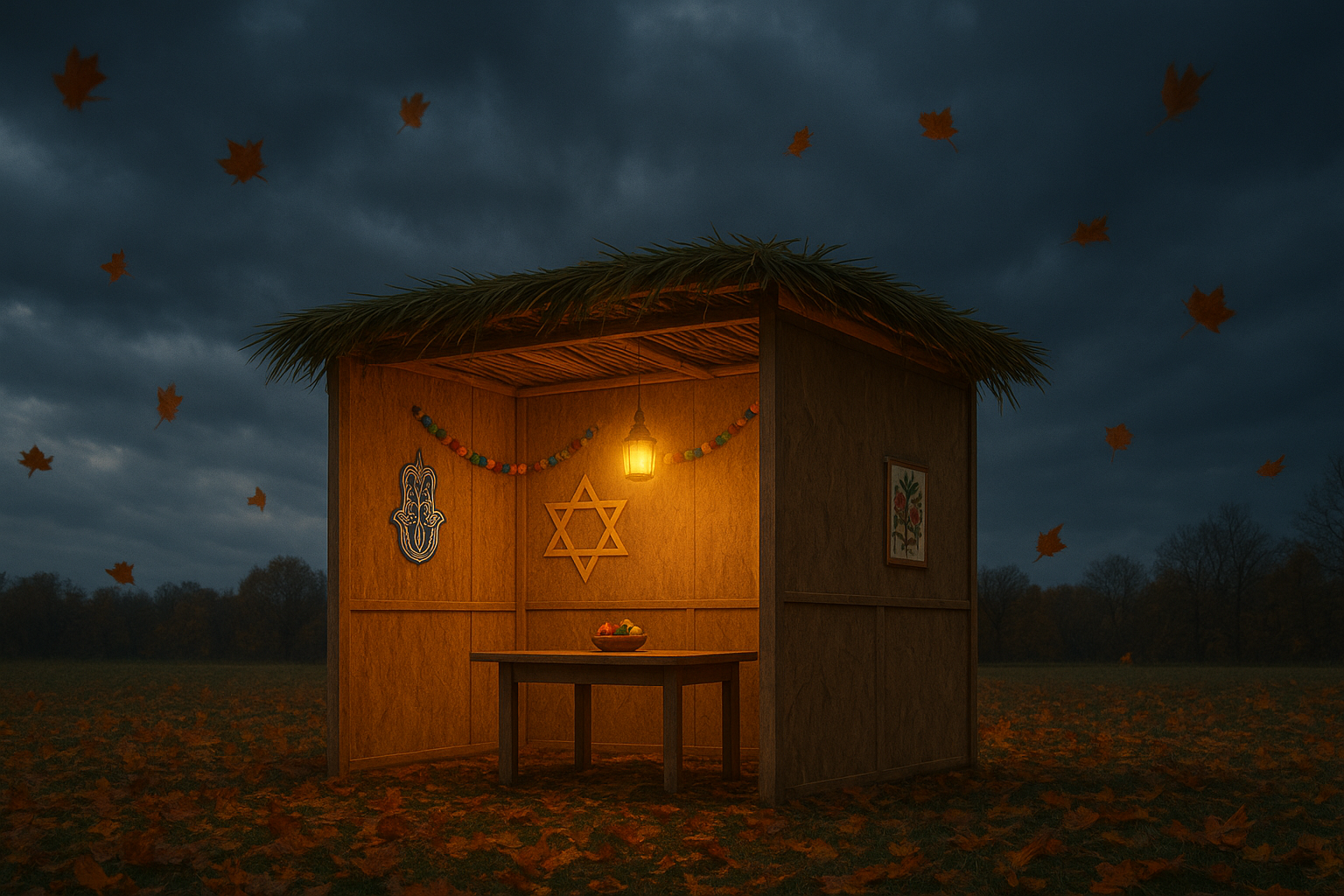
After the intensity of Rosh Hashanah and Yom Kippur you’d think we’d get a break for a bit. But no, immediately after Yom Kippur, we must rush to start building a sukkah (if we haven’t started already) and prepare for another two-day holiday, Sukkot.
The million dollar question is, why do we celebrate Sukkot in the month of Tishrei? As the fall season approaches, pumpkin spice lattes, maple kettle corn, and other orange colored seasonal items stock the shelves. The weather is finally cooling off and so this is the time we are commanded to dwell outside in our makeshift booths? Wouldn’t it make more sense for us to go out in the spring as the weather warms?
The answer often given is that we Jews go against the grain, risking colder weather, decreasing sunlight, and perhaps some slight rain to show that we trust Hashem. In fact, the holiday of Sukkot is rooted in bitachon, trust in Hashem. I like to think of the sukkah as a charging station for our bitachon reserves. But Rabbi Avi Stewart gave a d’var Torah this past Shabbos that gave a much deeper answer as to why we celebrate Sukkot just after Yom Kippur.
While in the wilderness, the Jews benefited from three iconic miracles. Water supplied by a traveling well, bestowed in the merit of Miriam. The Mana which fell from the sky every morning, similarly bestowed in the merit of Moses. Lastly, the clouds of glory (known as the Ananei HaKavod) which surrounded the camp, cooling the Israelites and protecting them. This was bestowed in the merit of Aharon. When did these miracles appear? Almost immediately after leaving Egypt. So it would make sense to celebrate Sukkot in the month of Nissan shortly after Pesach, another reason we should relax in our sukkahs in the Spring.
But unfortunately, it wasn’t long before the Israelites worshiped the golden calf and fell from the greatness they had achieved at Mount Sinai. After the sin of the calf, the Ananei HaKavod disappeared. The Chet HaEgel (“sin of the calf” in Hebrew) was said to have occurred on the 17th of the month of Tamuuz, which we observe with a fast day and it kicks off the lamentable Three Weeks. Moses went back up on Mount Sinai and prayed to Hashem for 40 days for forgiveness. Then starting on the first of Elul, Moses started relearning the Torah for another 40 days. Thirty days of Elul plus ten days brings us to the 10th of Tishrei, aka Yom Kippur, when Moses returned not only with the second set of Tablets, but also with Hashem’s forgiveness. And it was shortly after that first Yom Kippur that the Ananei HaKavod returned.
So from here we see that the joy of the sukkah isn’t just the protection and the trust we get from Hashem, it is the return of something lost. As my father-in-law’s Yiddish expression relates, it is having known something lost which really makes us desire it again. And all the more special when we get it back. Just think of any time you lost your iPhone or wallet.
But why 5 days after Yom Kippur? So Jews would have time to prepare for the holiday? Maybe. Many Jewish holidays fall on the 15th of their months, when the moon is full and the spiritual nature of said month is at its peak. So it would make sense for Sukkot to be celebrated on the 15th of Tishrei. However, there’s an even deeper reason. The Ananei HaKavod didn’t return immediately after Yom Kippur. It took five days. What were the Israelites doing for those five days?
According to the Vilna Goan, the Israelites spent those five days making free-will donations for the building of the Mishkan, the portable Temple where Hashem’s presence would dwell. On the fifth day, when the work started, the Ananei HaKavod returned. From this we learn that being forgiven is a great thing. But once the slate is wiped clean and there’s no more regret as the barrier of a relationship, what do you do with that? Do you go back to the way things were? Or do you capitalize on opportunity and show just how much the return of the relationship means to you? Because a second chance is only worth something if you do something with it. Hashem’s return, not from pity or mercy, but from Israel’s sacrifice to reinvigorate the relationship, that’s what really ushered in the glory of the supernatural clouds.
Food and water are necessary. But the refreshing comfort, the enduring protection, that wasn’t essential. In fact, many of the Israelites didn’t benefit from the Ananei HaKavod (i.e. those with tzora’as or the Erav Rav – the converts from Egypt.) It was a luxury. But one of love, which was very characteristic of Aharon. The mitzvah of Sukkah is technically optional. If it is too hot or there are a lot of mosquitos, you don’t have to do the mitzvah. You can go inside. No other mitzvah is like that. That is because it is an act of love that can only be felt after a holiday like Yom Kippur. But it truly comes when we make the first move after we’ve been given our pardon.
 Six Degrees Of Kosher Bacon
I love that connection to Aaron. It’s also cool that the Westwood Kehillah has a knitting club and a book club.
LikeLiked by 1 person