

“It happened when Pharaoh sent out the people…” (Shemos 13:17)
Beshalach begins with the Israelites finally being set free. But according to the Or HaChaim, “It happened,” alludes to pain and woe. When long held prayers are finally answered and the Israelites receive emancipation, what woe could possibly overcome them? The Or HaChaim points to a group of people known as the Erev Rav.
“[Israel] suffered greatest pain, “when Pharaoh sent out the people,” meaning the erev rav, who were sent out by Pharaoh… It was Pharaoh who sent out [the erev rav] to accompany the Jews and his reason was to force the Jews to return to Egypt. They, however, took the opportunity to attach themselves to Israel and against Pharaoh’s wishes converted to Judaism. But ultimately they caused Israel much pain.“
The Erev Rav, translated as the “mixed multitudes,” refers to Egyptians who witnessed the plagues of Egypt and Hashem’s Hand and realized that clearly the Israelites are on to something with their God. So they left with the Israelites and converted. The Or HaChaim gives a different motive (that they were agents of Pharaoh) but either way, they ended up converting. But why did these Egyptian converts “ultimately cause Israel much pain?”
According to the Midrash (Shemos Rabbah 47:2), several of the major failings of the Israelites in the wilderness are either blamed on or instigated by the Erev Rav. At the Golden Calf, Rashi (Shemos 32:4) says that the Erev Rav were the ones who gathered against Aharon and pressured him to make the calf. At the incident of the spies, the Erev Rav is blamed for wanting to appoint a new leader. They are associated with the complainers and the ones who desired meat, etc. It’s always bothered me that so much is blamed on the Erev Rav. It certainly feels like the Sages are passing the buck. What are we supposed to learn about our own failings if the generation of the wilderness is absolved by blaming someone else?
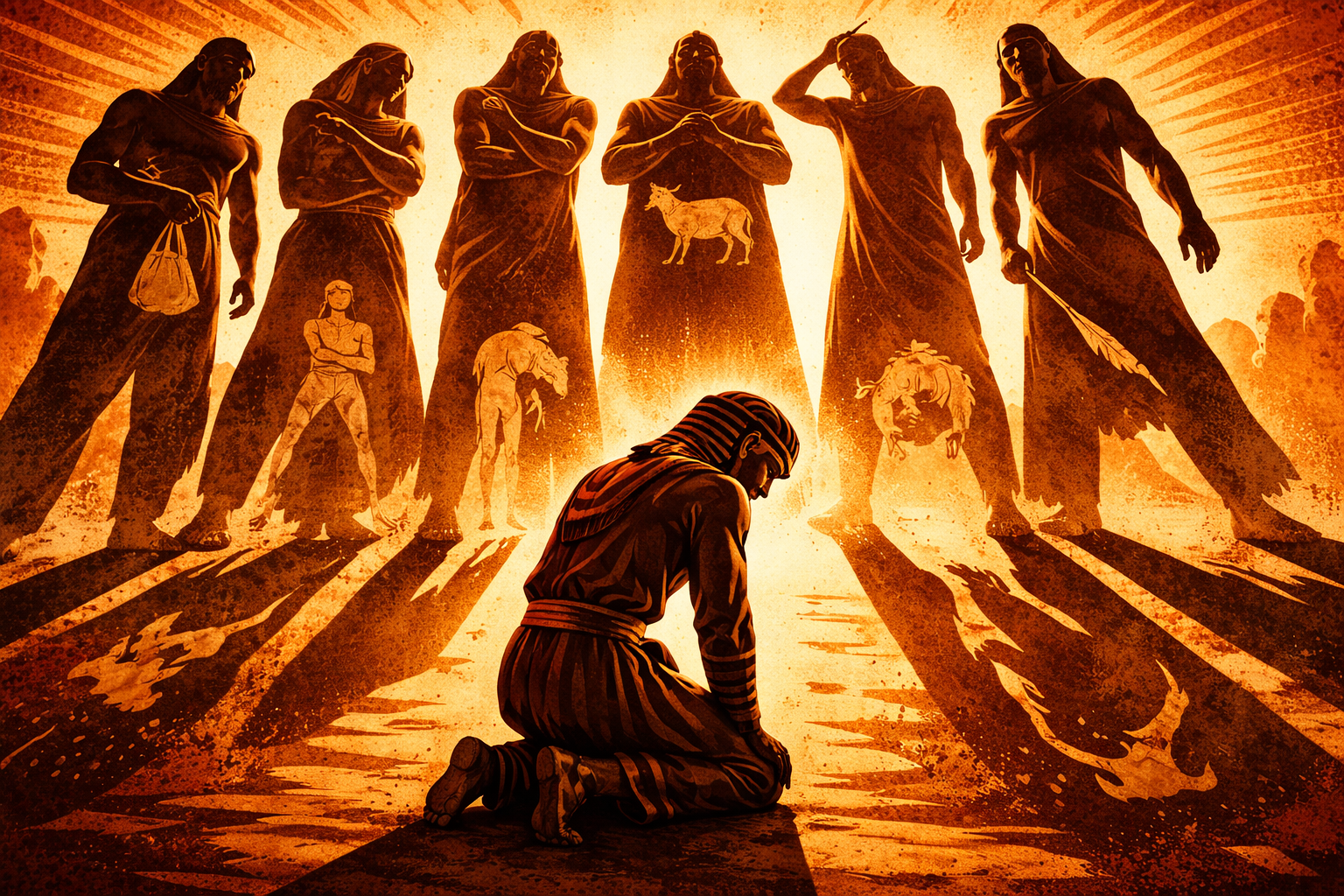
The name Erev Rav is an interesting choice. Why not the Gerim Rav (the mass of strangers/converts)? Erev means mixing. The evening is also called Erev because it is a mix of day and night. The string that allows Jews to carry on Shabbat is called an Eruv, because it blends the community into one domain. The essence of Erev is that it blends boundaries. So the Erev Rav were the culture, values, and priorities of Egypt that blended into the Israelites. They weren’t just a people, but ideologies. So the literal people in the Erev Rav may have transgressed in these worst cases, but it also may have been their influence that manifested as behaviors in the Israelites themselves.
Regardless of whether this idea is literally true for the Torah events, the Tikkunei Zohar says that not only does Erev Rav exist in every generation, they rule over Israel and cause them to sin. The Erev Rav manifests in the five following categories.
The Nephilim – “the fallen ones.” The Nephilim are those that once were great, but their true motivation diverged from serving Hashem, to seeking power, control, or lust. Their names are clearly a reference to the fallen angels who mated with the daughters of humanity.
The Giborim – “the mighty ones.” The Giborim use their power to manipulate people away from Torah. They coerce with their position. Perhaps they’re in government, or are the head of an educational institution. They have tremendous influence and use it to get what they want, and in doing so, lead people away from Torah.
The Anakim – “the giants.” These are the intellectual or cultural elites. Their arrogance and disdain for tradition mocks those who involve themself in “organized religion.” Academics, “the enlightened,” or anyone else who looks down on those seeking a path of spirituality and faith.
The Refaim – “the weak ones.” The Refaim are spiritually lifeless. They live a life of apathy and indifference. When anyone around them is moved to act, their response is to “relax.” They downplay passion to stay comfortably numb.
The Amalekim – Clearly a reference to the arch enemy of the Jewish people, the Amalekim are cold cynics who thrive on doubt. Where the other categories mock or manipulate faith, the Amalekim wage war against it.
At one time or another, we’ve all harbored one or more of these attitudes. That is because we are still in exile and it is impossible to completely shut out society’s influence, even if we wanted to. They are mixed within us as we are mixed within the greater culture. But it is funny. Because the Erev Rav was such a small fraction of the Israelites and they had tremendous influence. We lost the spiritual levels bestowed on us from Mount Sinai. We lost entering Israel for 38 years! But now in exile the Jewish people are the minority, but there’s no denying how much of an influence we have had on the world at large. A vocal minority can sway the majority.
So within yourself, what vocal minorities are swaying who you are? Do one of the five attitudes dominate your priorities? If so, change it. You may just find that a small change within yourself may have ripple effects that causes change to the entire society. Erev means mixed. Rav means masses. But it also can mean master. Are you shaped by what surrounds you, or do you rule over it?
This post was inspired by a teaching from Charlie Harary.
This post was inspired by a teaching from Charlie Harary.
 Six Degrees Of Kosher Bacon