

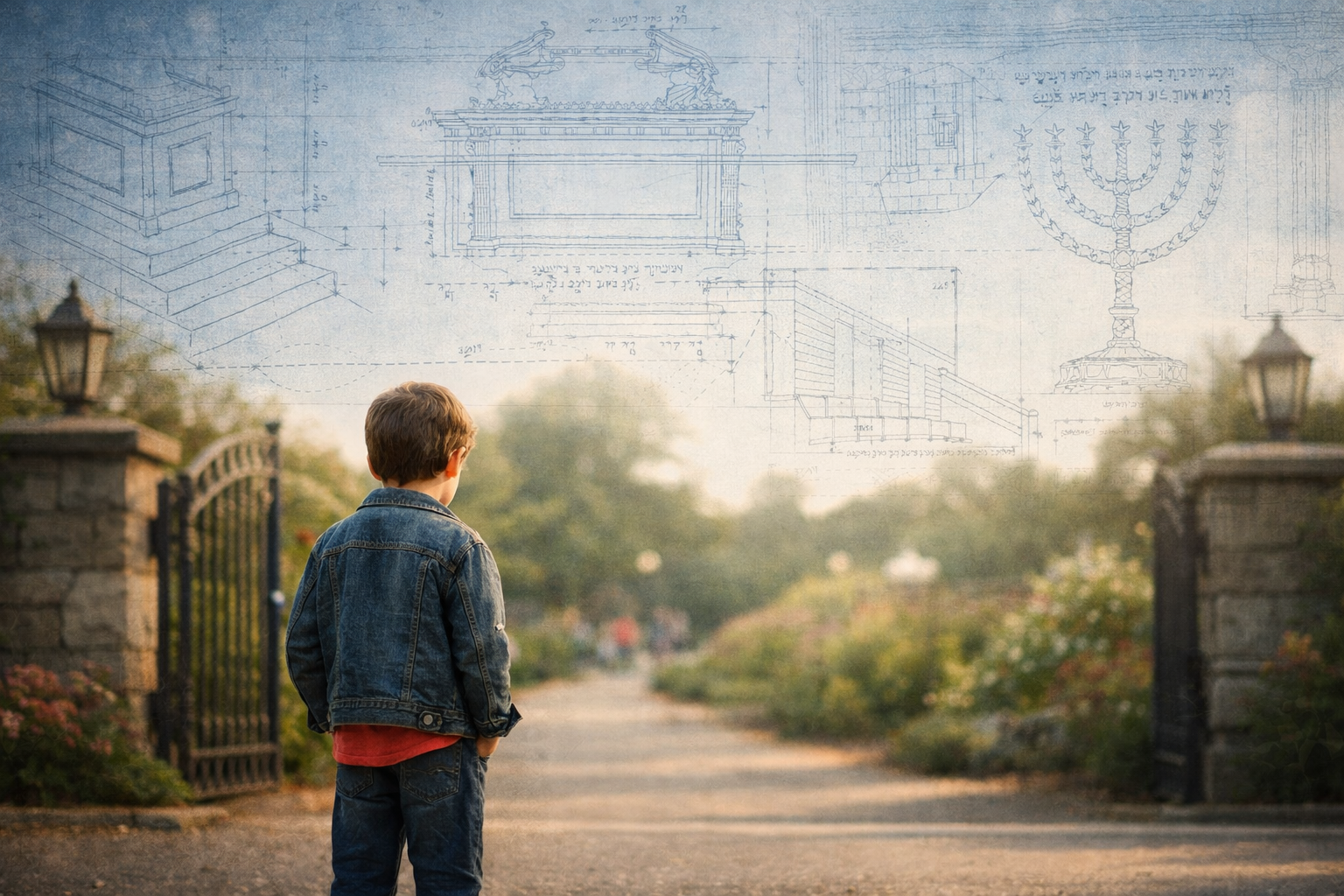
As a child my father liked to refer to me as “motormouth.” I would talk about movie facts. Tell Simpsons jokes. Tell inappropriate jokes. You know the type of kid, the one who can’t take a hint that the attention you’re giving them is just to be nice. And my victims weren’t limited to the family but comic book shop employees, boys trying to date my sister, etc. Now there was one guy who worked in my dad’s office, we’ll call him Bob, who was a target whenever I saw him. I would talk with him for hours.
So one day my father’s office took part in a walk for charity and my family went to participate. And Bob was there. So rather than walk with my parents around the botanical gardens, I said I’d walk with Bob. Bob seemed excited… but he said he had to get something from his car.
I waited at the entrance of the walk, eager, anticipating. But Bob never came back. Eventually my parents finished the walk and it wasn’t too much of a surprise to them that Bob left me waiting. They seemed to know when he said “I’m going to my car” that he wasn’t coming back. But for what I guess was my 10-year-old mind, I just couldn’t understand why he wouldn’t just tell me he needed or wanted to go. Why would he just keep me waiting? Why did I wait so long thinking he was going to come? Why did I need my parents to point out the obvious truth? It would take me years to understand what was really happening.
This week’s Parsha, Terumah, is the first time we get the concept of the Mishkan. It is a portable sanctuary where the Jewish people will be able to experience the Shechinah, the presence of Hashem. The Parsha goes into the donations to build the Mishkan (which is where the Torah portion gets its name). It goes into copious details about all of the sacred vessels in the Mishkan (the altars, the Menorah, the Ark), as well as the precise dimensions of the walls and sockets and pretty much everything necessary to build it. And to be honest, it’s pretty dry. Do you feel like reading furniture instructions? There’s a reason why Ikea only uses pictures.
The mishkan would be replaced by the permanent structure known as the Beis HaMikdash (aka Solomon’s Temple or just The Temple). And that would get destroyed. But then it would be replaced by the Second Temple, which would get destroyed too. And for 2,000 years we’ve been waiting for the prophesized Third Temple. The Jewish people have been yearning for generations to feel the presence of Hashem, to experience wholeness and achieve our full potential. For redemption.
But many of us have moved on. A whole section of the religion gave up on the Temple and started naming the neighborhood sanctuary a Temple. Meanwhile, it seems a good majority of the world condemns us for even wanting the Temple to return. If we look at the blessing for the Temple in our daily prayers, it ends, “Baruch ata Hashem, hamachazeir schinaso l’tzion.” Blessed are you Hashem who restores his Shechinah to Zion. Anyone who says Zionism is a modern invention and not part of Judaism has no idea what Judaism actually believes.
Should we continue to wait for a Divine “Bob” who never comes? Do we stop being foolish children and move on? This is a religious blog and I’m probably going to preach the dogma and say keep waiting. But why?
But here’s the truth, I wasn’t really waiting for Bob. I didn’t know anything about Bob. I never let Bob talk. I wanted somebody to laugh at my jokes, let me talk about movies, and give me unwavering attention. If I were in Bob’s position today, I maybe wouldn’t lie to the 10-year-old, but I wouldn’t stick around very long either. I was insufferable. I would tell you every trivia fact from every Star Wars movie! I could tell you the first appearance of every X-Men character and the issue number! Copious minutia. Boring to everyone else, infinitely fascinating to me.
I believe that’s the reason we may not have the Third Beis HaMikdash yet.
Every year we read Parshas Terumah, and I’m willing to bet the vast majority of us skim through these details if we look at them at all. But if we were really interested in having the Third Temple, we would be fascinated by the minutia. Our relationship with Hashem is often like my relationship with Bob. We pour out our mind and heart to Him and we’re supposed to. There’s nothing wrong with that. And Hashem is as excited to listen to us as we are to talk to Him. But there is a deeper and more profound level to the relationship. How much do we really care about what Hashem wants? How eager are we to take in His Presence as opposed to expressing ours?
Prayer is meant to change you. In order to do that we have to look outside ourselves, learn, grow, change. We can’t do that if our focus is 100% on ourselves. The Temple was a place of miracles that made it impossible for you to stay in your self-centric world view. The service there ushered in Hashem’s Shechinah and in doing so, shaped existence. The Sages describe the loss of the Temple not just as architectural, but existential. “Rabban Shimon ben Gamliel says that Rabbi Yehoshua testified: From the day the Temple was destroyed there is no day that does not include some form of curse. And since then the dew has not descended for blessing, and the taste has been removed from fruit.” (Mishnah Sotah 9:12)
This week I got a little obsessed with a collector’s item. I watched YouTube videos of the unboxing of the item, how tall it is, how far it bends, how it’s colored and even more details I won’t go into. I knew everything about the item before I bought it and opened it myself. We all have that thing we obsess over. Maybe it is a piece of jewelry, a car, or our work. But if we really understood the treasure we once had and yearned for it properly, we’d love reading the minutia of Terumah. It would be fascinating. And in doing so, the focus of the relationship wouldn’t just be centered on our interests, but would also bring us to know Hashem. A true connection. It’s okay to be that annoying kid at the botanical gardens when the person you’re talking to cares about it as much as you do. But it is even better when the shared interests bring you to understand your friend too.
 Six Degrees Of Kosher Bacon