
Once during my weekly Torah learning with my father, he asked me, “What does redemption mean?” My father is a science-minded humanist, a doctor, and a man who used to profess that he was a two-day-a-year Jew. Now, he is a Jew to his core every day of the year; why else would he be learning Torah with me? But there is one thing that really bothers him about Judaism. The concept that we call ourselves, The Chosen People. In fact, anything that puts Judaism up on a pedestal or distinguishes us in any way is a problem. I once pointed out during the holiday prayers we say the phrase v’romamtanu mikol hal’shonos, “You exalted us above all other languages.” He thought the prayer was abhorrent.
But this very idea, that our words are distinguished, that is what redemption is all about.
Pesach means to passover, so the English name is very appropriate. However, the Rabbis also point out that the word Pesach can also be broken down into two Hebrew words Pei and Sach. Which would mean, to say with the mouth. So we famously have the mitzvah of Seder night. Its primary focus is to tell over the story of the Exodus, aka Maggid. And anyone who elaborates on the story is considered honorable. But it may be from this act of telling the story that we get our redemption in our present day.
When we start the Maggid section do so with the four questions. Mah Nishtana Halilah HaZeh. Every Jewish kindergartener knows, “Why is this night different from all other nights?” But according to Rebbitzen Esther Wein, the true translation is, “How did this night become different?” The Mah is not why, but an onomatopoetic interjection of wow. Our answer? We recline. Dip twice. Only eat matzah. Are those satisfying answers? Of course not. Sometimes we recline and sometimes we dip, why does it matter that we have to do it tonight? Beyond the symbolism is the notion of relevance. Sure we do these things any other night, but it never makes a difference.Tonight however, everything matters. Everything is relevant.
Rabbi Joseph B. Soloveitchik discussed the key elements that keep a slave from being free. Beyond the physical bondage and being at the mercy of those more powerful, is the slave mentality. They live a life of irrelevance, their will is negated, but worst of all are conditioned to accept they are subhuman and with that, they accept whatever evil is done to them. They are mute. Voiceless. “Former inmates of the concentration camps – and I spoke with many – told me that with the passage of time they got used to everything. Nothing disturbed them, nothing surprised them anymore. They were totally, totally anesthetised against suffering.” This acceptance of being irrelevant is the true slavery.
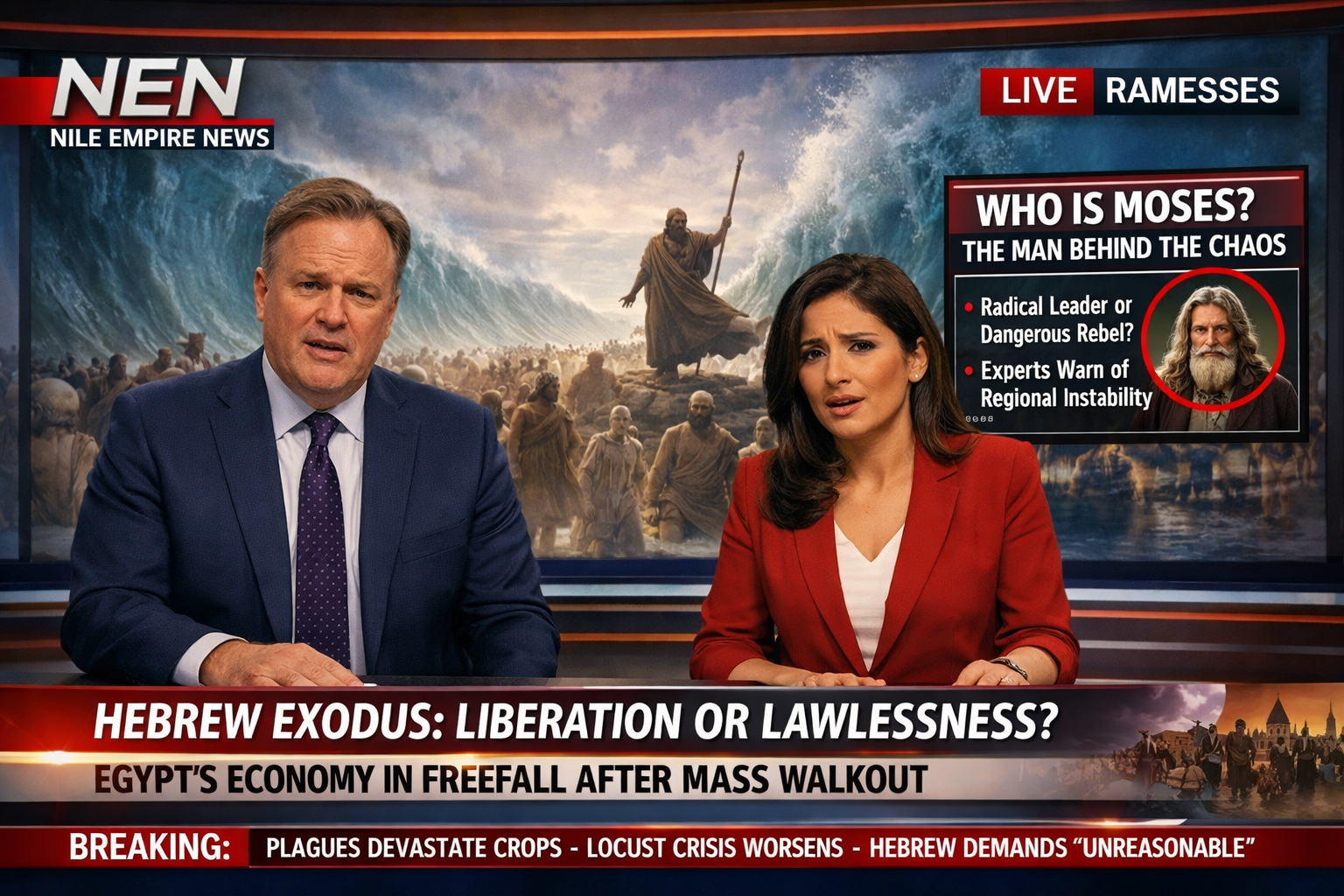
So the difference between slavery and redemption is the difference between relevance and irrelevance. At what point in the story did this change start to happen? Enter Moses. He steps out of the palace and sees an Egyptian taskmaster beating a Hebrew slave to death. For the first time in over a century, someone does something about it. With this idea, Rabbi Soloveitchik makes a distinction between pain and suffering. Pain is a feeling of the body. Suffering is an emotional if not spiritual affliction. Pain can be tolerated, endured, you can take pills to numb its sensation. Suffering is the anguish of knowing the pain is unjust, unfair, and tragic. Someone born into slavery isn’t suffering the way someone who was kidnapped, brought into slavery, suffers. So when Moses kills the taskmaster, the Jewish people remember they are a people who are worth something. Their lives have value. Their pain becomes suffering and this is the first time Hashem hears their cries. This cry, this voice, isn’t just to be free of pain, it’s a plea to matter. This is the beginning of the redemption.
The story of the Exodus isn’t just about a nation of slaves becoming free. It is about a people transitioning from irrelevance to steering the course of history. Are we a Chosen People? Was our speech exalted above all the other nations? Look at the news. The percentage of Nobel Prize winners. The Israel/Iranian war that is going on right now. What is the only thing that unites the far right and the ultra liberal left? The world can’t stop talking about us. Some nations are content to clock in, get their pay, close up shop when they’ve made their money, and golf or go to the beach the rest of the day. Other nations are a driving force for change. The Jewish people have always been the latter, and because of that, we’ve always been at the center of every human advancement. Law, tech, art, medicine, and more.
When it comes to the four sons, the response to the Wicked Son has always bothered me. After his dismissive statement, the Haggaddah says you should “blunt his teeth.” I’ve never been a fan of a violent reprimand. However, I recently learned, this is actually a phrase that means, answer him in such a way that he has no possible response. Meaning that you have neutralized his ability to retort through the sharpness of your wit. But on another level the phrase is saying that since he’s excused himself from the story we say “had you been there, Hashem would not have redeemed you.” In other words, by opting out of the story, you’ve lost the voice to be relevant.
Story is quite possibly the most powerful way to relate a message. The film and television industry is a behemoth and, oddly enough, Jews have always been a prominent part of it. Why was it so important that the Israelites had to suffer such cruel and devastating slavery? Perhaps it was to show the world that no matter who you are, no matter how badly you were disadvantaged and antagonized, you can overcome the victimization and achieve greatness. That’s literally the plot of every movie! The most unlikely underdog overcomes their insurmountable odds and obstacles to emerge victorious. As long as they believe, usually in themselves. Well, you can’t write God into fiction. He only works in the real story.
Redemption on Pesach is about realizing everyone and everything matters. Every person has a story to tell. They are not disposable, they are not statistics, and they are not irrelevant. But so do all the little things. Before writing this, I was literally cleaning crumbs out my towel drawer. Does God really care about something so small? Absolutely. Our choices have consequences. The Divine is in the details. And yes we are the Chosen People. But not for extra ice cream. To pick up the dustpan and clean up all the shmutz. The Seder is about not just telling over the story, but being a part of it. And with that participation, the acknowledgement that we have purpose and role to play. Being Chosen doesn’t mean the people are great, it means the mission they chose to commit themselves to is. We matter, as long as we decide to matter. We can detach from that and become a slave to our indifference and distractions. Or we can feel the suffering of our ancestors, remembering their cry for relevance, and lead a life that steers the Jewish people and the whole of humanity to the greatest redemption.
 Six Degrees Of Kosher Bacon