
Redemption: From Irrelevance to the Focus of the World
On Pesach, we don’t just tell a story, we step into one.
Redemption is the shift from being irrelevant to realizing that every action, every word, actually matters.


On Pesach, we don’t just tell a story, we step into one.
Redemption is the shift from being irrelevant to realizing that every action, every word, actually matters.

I grew up staring at an “eternal flame.” One day, it was gone.
It took me years to realize the lesson wasn’t that the flame failed, it’s that someone has to keep it alive.

I always liked the idea that Judaism doesn’t have a hell. Eternal torture for believing the wrong thing always felt like a scare tactic. Except Judaism actually does have a hell. It’s called Gehinnom. But the Jewish understanding of it is very different from what most people imagine.
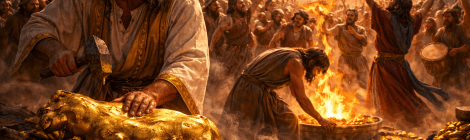
The Gemara in Sanhedrin suggests that Aharon’s greatest strength, his pursuit of peace, actually led to his greatest mistake during the Golden Calf incident.

Mordechai was one of the heroes of the whole Purim story. So why is his name missing from the title? This is the heartbreaking reason why Esther’s name stands alone.

The day I got left behind wasn’t really about abandonment.
It was about a kid who wanted to be heard — but never stopped to listen.
I’m starting to think that lesson wasn’t just about childhood but about my relationship with God.

“An eye for an eye makes the whole world blind.” — Gandhi. It’s a great quote, but it might be based on a total misunderstanding of the text. From Finnish billionaires to concert pianists, here is why “Eye for an Eye” isn’t about taking… It’s about giving back.

We talk a lot about unity as if it’s automatically good.
This week’s parshiyot suggest something more unsettling: unity can be powerful and destructive — depending on what it’s built on.

The Sages blame many wilderness failures on the Erev Rav, the Egyptian converts.
But was this about scapegoating a group… or diagnosing influence?
What if the real danger wasn’t them, but what they mixed into us?

When the Israelites left Egypt, they chose to take the leftover maror with them. It wasn’t commanded. It was carried.
What we do with our pain after freedom might matter as much as how we survive it.
 Six Degrees Of Kosher Bacon