
The theme of differing perspectives runs rampant in Parshas Balak. It’s the only parsha not told from the Israelites’ point of view, but the antagonist. When Bilaam argues with his donkey, from the perspective of Balak’s soldiers, Bilaam appears to be going crazy yelling at his donkey, since they can’t see the donkey’s part of the conversation. Bilaam berates his beast of burden because from his perspective he can’t see the angel who stands ready to kill him. From Balak’s perspective, Bilaam initially refuses the mission to curse the Israelites because he thinks Balak is holding out for more money. He’s oblivious to the fact that what Bilaam can and can’t do is being dictated by Hashem. And the Israelites are oblivious to the whole series of events that could have spelled their doom. These are but a few examples of how perspective shapes this Torah portion.
But the parsha has one verse concerning perspective that is at the heart of why Balak, Bilaam, Moav, the Moabites, and essentially all antisemitic forces are so threatened by the Jewish people. And most translations of the scripture completely miss the lesson.
[Balak] sent messengers to Balaam son of Be’or…to call for him, saying, “A people has come out of Egypt, and behold, they have covered the surface of the earth and they are stationed opposite me. (Bamidbar 22:5)
The obvious understanding of the verse is that the Israelites are so numerous outside of Moav that Balak can’t see the ground. Rashi cites a Midrash that says Balak is referring to the nations of Sichon and Og who Israel just obliterated. They were Moav’s most powerful allies and with them gone, Balak panics. “Covered the surface of the earth” would be similar to “they’re closing in on me.” But the Kotzker Rebbe takes a completely different approach.

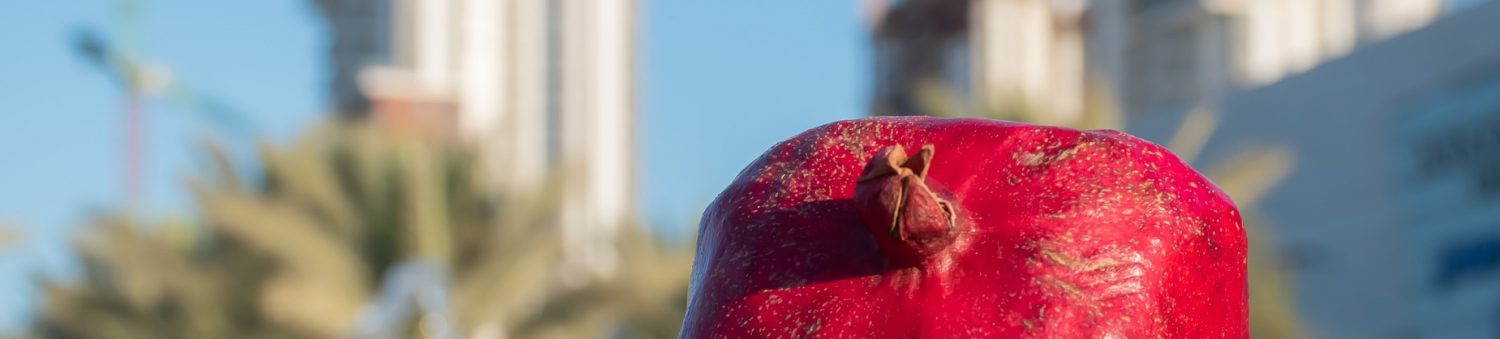
In Hebrew the line is henei keesaw es-eyen haaretz. Literally, Behold, they have covered the eye of the earth. What is the eye of the Earth? You’ll notice it’s not just the eye which would be ha-eyen, but es-eyen. Alef tav (es) is a word that doesn’t translate into English but essentially it functions as a SUPER THE adjective. So what is this super important eye of the Earth Balak is so concerned about? According to the Kotzker Rebbe it is the perspective that Earth provides.
There’s no question that the environment you inhabit has tremendous influence on your perspective. The people who surround you hold incredible sway over what you feel is important. How good your country’s economy is doing will probably decide how you vote. And most of all, factors that affect how you will survive will be the lens for every decision if a real threat presents itself. That’s because we are living beings on this physical Earth and so obviously that is our perspective. We live our lives according to the rules of this physical existence.
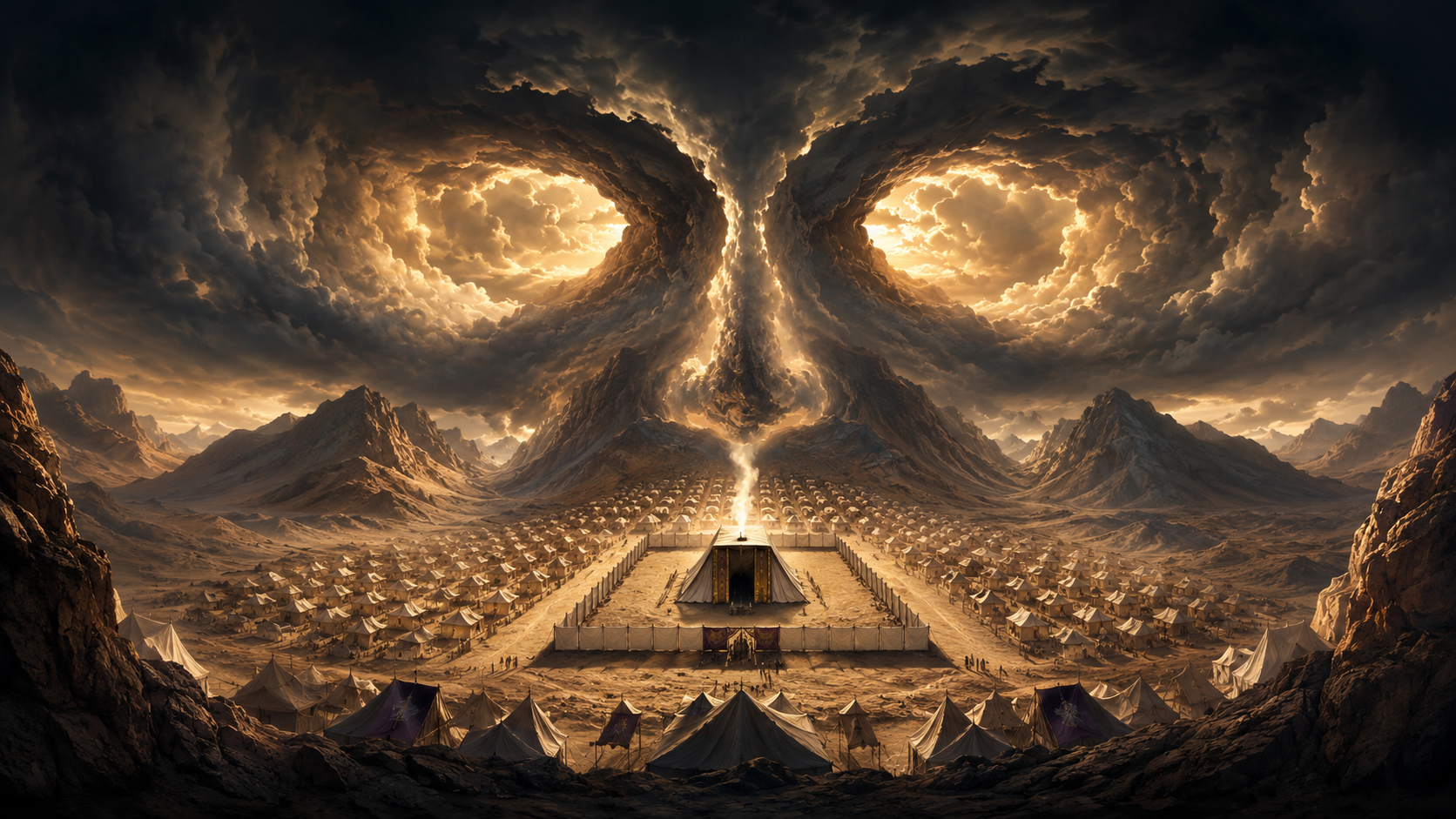
But then the Israelites come along. These slaves of the most powerful nation the world has ever known and they’re not only freed, their God brought that civilization to its knees. Then they literally walked through a sea, were crowned as God’s people, and received His Torah. Now they’ve just had a flawless victory over the New York and Los Angeles of the region and they’re sitting right outside your walls. Every rule that governs your physical existence, the perspective of Earth, is being called into question. What’s this new perspective these Israelites are offering?
The Sfas Emmes says, “The job of this nation is to transcend the external vision and to reveal the holiness behind it.” The Israelites’ perspective is that there’s something deeper to the Earth, something beyond the finite, running the show. Where the eye of the Earth is about survival, the eye of Heaven, the Godly perspective, is that the physical world has meaning. Our lives have purpose on Earth beyond just surviving.
This is why Balak is so angry at the Israelites, and helps explain why antisemitism is so resistant to rational argument. The Earthly perspective says, “I can do what I want. I have no responsibility to anyone or anything else unless I choose.” The success and survival of the Jewish people throughout history directly threatens that outlook. It says there is a responsibility to fix the world. What you do does matter. There is something bigger going on. A Higher Power is involved and does care. And when your time on this Earth is over, you are not.
It’s one thing when the Jewish people are beaten or nearly destroyed by a Holocaust. “Fine. They’re a sad, pathetic people, but let them have their silly ways of not eating pork and taking off their Saturdays.” But when, in their microscopic minority numbers, they start winning wars, driving innovation, revolutionizing technology, becoming leaders in every field of society… that’s when that quiet voice pops in saying, “They might be right.” The eye of the Earth becomes covered and there’s panic, just as Balak panicked.
These days our perspectives have become part of our identity. Listening to anything that threatens or disproves our worldview isn’t just intellectually uncomfortable, it can feel like an attack on who we are. That’s when people put up walls, lash out, or simply walk away. Changing your mind today isn’t just about adopting a new opinion. It can mean changing your social media brand, losing your community, and reevaluating your lifestyle. And that’s just for politics. Imagine what it means to rethink the very nature of reality.
The eye of heaven perspective is a scary one. It is called Emunah and Bitachon. The belief that Hashem runs the world and the behavior one has when they live life with that perspective. It’s scary because it is so hard to hold on to. For moments you can live with this perspective and suddenly life becomes a joke. Not a cruel pessimistic joke that God is making at your expense. But a living comedy. All the inconveniences and annoying mishaps are there because you need to grow emotionally, not get to your meeting on time. Life is a facade.
If you’ve ever tried to desperately buy some amazing deal online for something you really didn’t need… and suddenly your password for the site doesn’t work, or your internet goes down, or your credit card is rejected and you have to call the bank. You think, “Of course!” But yes, of course, because you know you shouldn’t buy it and Someone is giving you the hint. If you have the eye of Heaven then you laugh and thank Them for the nudge.
Pirkei Avos 2:4 says, “Do His will as though it were your will, so that He will do your will as though it were His. Set aside your will in the face of His will, so that he may set aside the will of others for the sake of your will.” When we operate from the perspective of Heaven, nature aligns to help us along our path. And in doing so, it reveals a truth that the world cannot deny, however much they try. And they will try to deny it. But just as Bilaam couldn’t curse the Israelites and Balak’s whole plan backfired, acting with the eye of Heaven will ultimately change all perspectives for good.
This post was heavily inspired by Rabbi YY Jacobson’s class Parshas Balak: David and the Spider Web.


I love thar Sfas Emes quote! Very timely message, thanks and have a wonderful Shabbos!
LikeLiked by 1 person